
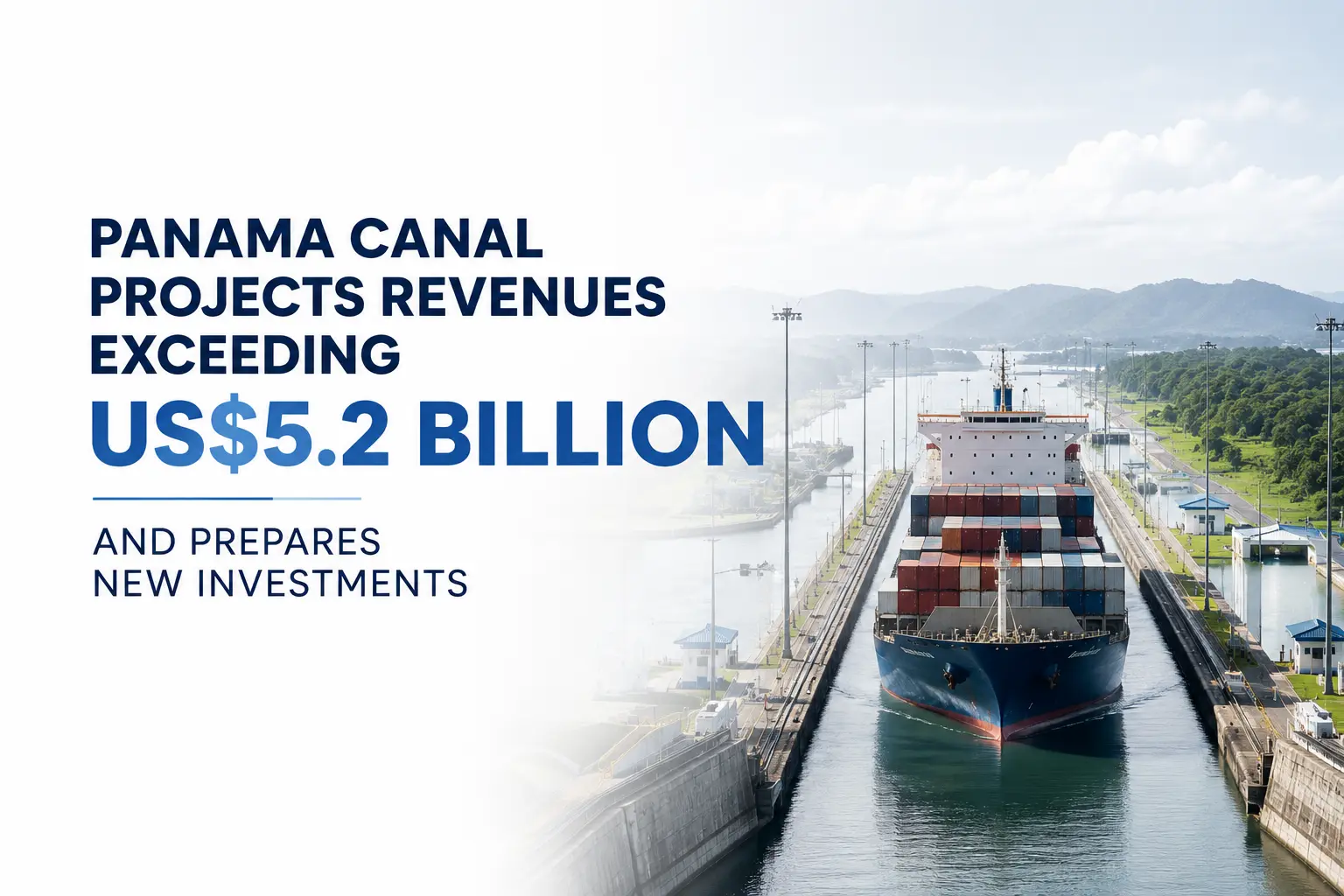

The Panama Canal is projected to close fiscal year 2026 with revenues exceeding US$5.2 billion, surpassing initial estimates due to the increase in vessel transits recorded in recent months. The growth was driven by the restructuring of international maritime routes following the temporary closure of the Strait of Hormuz.
Increased Maritime Traffic and Logistics Revenues
During the period of highest demand, the interoceanic waterway recorded between 40 and 41 daily transits, above the usual average of 34 to 35 vessels. This increase also generated higher revenues through the auction system that allows vessels to obtain priority passage, with some ships paying millions of additional dollars to reduce waiting times.
The rise in traffic was mainly driven by increased movement of vessels transporting liquefied natural gas (LNG) and oil from the United States to Asia, once again strengthening the Canal’s role as one of the world’s key corridors for international maritime trade.
Future Expansion Program and Panama infrastructure updates
At the same time, the Panama Canal Authority continues advancing an expansion program valued at approximately US$8.5 billion, which includes the construction of a new reservoir, a dam, two port terminals, and a liquefied petroleum gas (LPG) pipeline. These projects aim to increase the Canal’s operational capacity and meet growing logistics demand in the coming years.
Authorities expect the development of the new ports and reservoir to begin between late 2027 and early 2028, while the complete expansion program is expected to be completed by 2032.
With revenues exceeding projections and a portfolio of major investments underway, the Panama Canal continues expanding its capacity to support global trade and strengthen Panama’s position as one of the leading logistics hubs in the Americas.

