
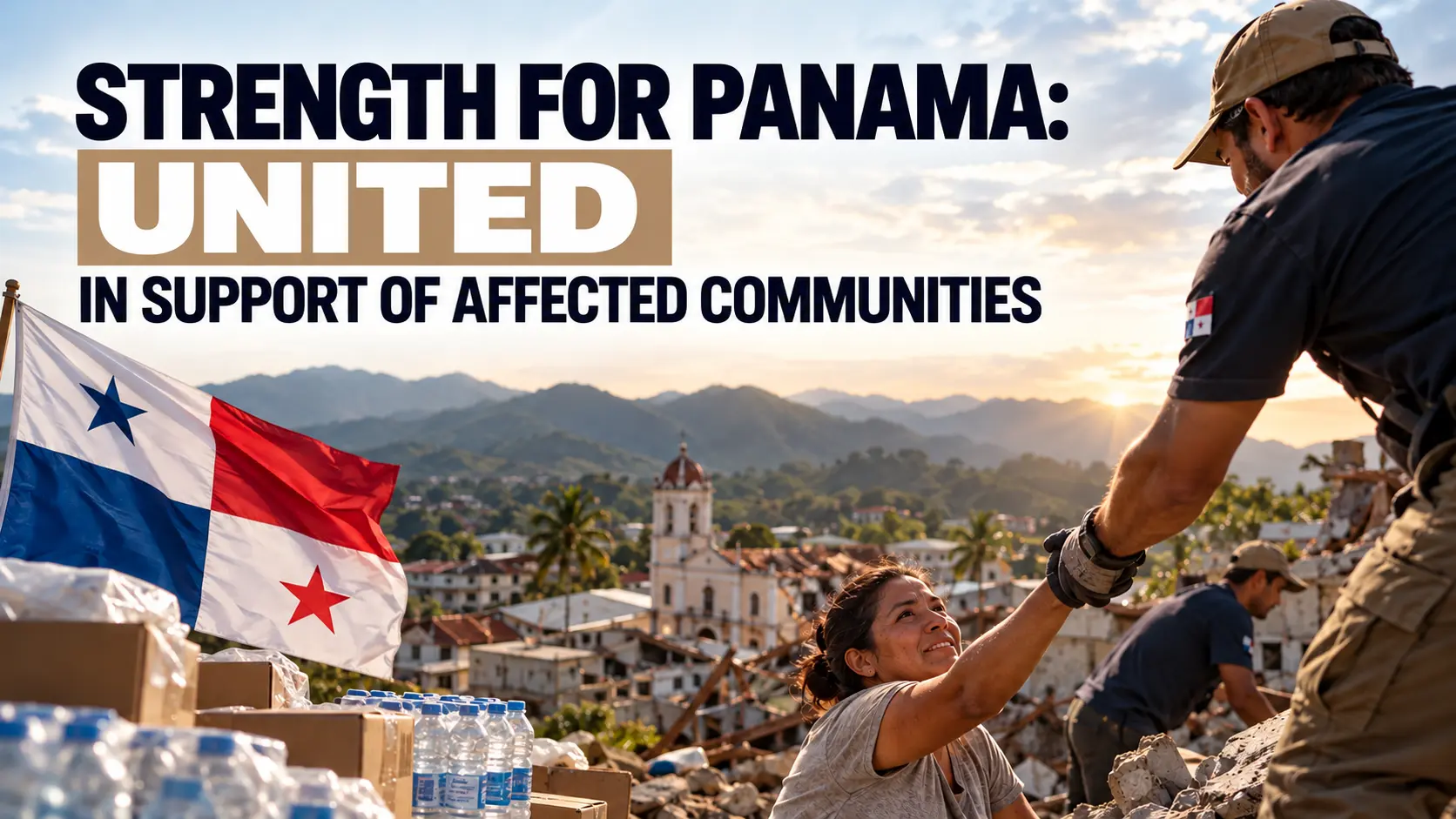

The Panama earthquake of October 9, 2026, a magnitude 7.5 event according to the Institute of Geosciences of the University of Panama (IGC-UP), is one of the most difficult moments the country has faced in recent years. In its wake, the solidarity among Panamanians and the support of the international community remind us of the importance of standing together when we need it most.
Table of Contents
Key Facts: The Panama Earthquake of October 9, 2026
- Date and time: Friday, October 9, 2026, at 12:56 p.m. local time.
- Magnitude: 7.5 according to Panama’s Institute of Geosciences (IGC-UP); 7.7 according to the U.S. Geological Survey (USGS).
- Epicenter: about 39 km northwest of Tonosí, Los Santos, in Veraguas territory near the provincial border, at a depth of 4 km (IGC-UP).
- Aftershocks: more than 55 by the evening of October 9, including 26 of magnitude 5.0 or higher and one of magnitude 6.9.
- State of emergency: declared by the Government of Panama on October 10, 2026.
- Injuries: 27 people with minor or moderate injuries and no deaths or missing persons reported by the National Civil Protection System (SINAPROC) as of the PAHO situation report.
- Most affected provinces: Veraguas, Coclé, Herrera and Los Santos.
- Response on the ground: more than 1,200 homes and buildings inspected by SINAPROC, over 63,000 pounds of humanitarian aid delivered by air and 250 tons by land.
- International aid: US$5 million and two USAR teams totaling 20 people from the United States; a US$250,000 donation and up to US$50 million in emergency financing from CAF, the Development Bank of Latin America and the Caribbean.
A Country United After the Panama Earthquake
The earthquake of October 9, 2026, shook Panama and caused damage to homes, roads, public buildings, and infrastructure, particularly in communities in the country’s interior. The provinces of Veraguas, Herrera, Los Santos, and Coclé are among the affected areas.
Behind every damaged home is a family, a story, and years of hard work. Beyond the figures and material losses, this is a time to express our solidarity with those who have lost part of their homes and with everyone working to help affected communities.
Solidarity That Crosses Borders
In the face of this difficult situation, several countries and international organizations have expressed their solidarity with the Panamanian people and their willingness to provide assistance.
The United States announced resources and personnel to support the emergency response. According to published reports, the assistance includes a US$5 million aid commitment and the deployment of a 20-person team.
Colombia expressed its solidarity with the Panamanian people and established consular assistance channels.
Ecuador also expressed its willingness to support Panama in responding to the emergency.
Adding to this support, CAF, the Development Bank of Latin America and the Caribbean, announced a US$250,000 donation to address humanitarian needs and made an additional US$50 million available to the Panamanian government through its natural disaster financing facility.
Likewise, UNHCR mobilized 16.8 metric tons of humanitarian relief supplies from its emergency warehouse in Panama, in coordination with the government and the United Nations system.
Every gesture of support, every resource mobilized, and every offer of assistance serves as a reminder that Panama is not alone during this difficult time.
The Value of Those Who Help
The response to an emergency depends on more than institutions alone. It is also built through the work of rescue teams, healthcare professionals, volunteers, community organizations, businesses, and citizens who contribute their time, resources, and effort.
We are grateful to those delivering food, water, and essential supplies to affected communities; to those working to restore roads and essential services; and to everyone supporting families facing this difficult situation.
In moments like these, solidarity is demonstrated through concrete actions, empathy, and a commitment to those who need help the most.
Standing Together Today, Restoring Hope for Tomorrow
Recovery does not end when the immediate emergency passes. Many families will need time, resources, and support to restore their homes and resume their daily activities. The rehabilitation of homes, schools, healthcare centers, and roads will be essential to helping communities return to their daily lives safely.
As a company that is part of Panama, we recognize that a country’s development is measured not only by its investments, buildings, or infrastructure, but also by its people’s ability to support one another during the most difficult times.
Today, our thoughts are with every affected family and with all those working to help the country recover.
Panama Is Stronger When It Stands United
To the affected communities, we express our hope that they will overcome this difficult situation with safety, strength, and hope, and that every family will receive the support they need to regain peace of mind.
To the teams working tirelessly in emergency response efforts, we extend our recognition and appreciation for their commitment and dedication. We also thank the countries, international organizations, institutions, businesses, volunteers, and citizens who have offered or provided assistance.
In moments like these, solidarity and cooperation remind us of the importance of supporting one another, joining forces, and working together so that Panama can move toward a safe and dignified recovery.
May the solidarity that unites us today continue throughout the recovery process, because a country rises not only by rebuilding its buildings and roads, but also by caring for its people, extending a helping hand to those who need it most, and demonstrating that even in the most difficult moments, unity, empathy, and solidarity remain among our greatest strengths.
Frequently Asked Questions About the Panama Earthquake
When and where did the Panama earthquake happen?
The earthquake struck on Friday, October 9, 2026, at 12:56 p.m. local time. According to Panama’s Institute of Geosciences (IGC-UP), the epicenter was about 39 km northwest of Tonosí, Los Santos, in Veraguas territory near the provincial border, at a depth of 4 km. It was felt across most of Panama, including Panama City, and in Costa Rica and Colombia.
Why do reports give different magnitudes for the earthquake?
Panama’s Institute of Geosciences of the University of Panama (IGC-UP) measured the earthquake at magnitude 7.5, while the U.S. Geological Survey (USGS) reported magnitude 7.7. In Spanish-language coverage it is widely referred to as the “terremoto en Panamá 2026”.
Which provinces were most affected?
Veraguas, Coclé, Herrera and Los Santos were the most affected provinces. Authorities have focused aid on these areas, delivering water, food and tents, clearing roads blocked by landslides and rehabilitating hospitals and strategic infrastructure.
What international aid has Panama received after the earthquake?
The United States committed US$5 million and sent two USAR technical teams totaling 20 people. CAF, the Development Bank of Latin America and the Caribbean, donated US$250,000 and made up to US$50 million available through its natural disaster financing facility. Colombia, Ecuador and other countries also expressed their willingness to help.
What comes next for the affected communities?
Recovery will take time. The Ministry of Housing (MIVIOT) is moving building materials to affected communities and, together with local governments, is conducting a census of damaged homes while debris is removed. Rehabilitating homes, schools, health centers and roads will be key for provinces such as Coclé, where ongoing development projects in Coclé were already shaping growth before the earthquake.
Sources and Further Reading
- La Prensa: Panama thanks international solidarity after the earthquake
- CAF: Support for Panama with US$250,000 and US$50 million after the earthquake
- Presidency of Panama: Institutional assistance after the earthquake
- PAHO/WHO: Situation Report 1, Panama earthquake, October 2026
- SINAPROC: National Civil Protection System of Panama

